
From the Sensex firms, Infosys climbed 3.86 per cent. HCL Tech, Tata Consultancy Services, Axis Bank, Kotak Mahindra Bank, Titan and Tech Mahindra were also among the gainers. However, Eternal, UltraTech Cement, Bharti Airtel and Adani Ports were among the laggards.

Lord Ganesha's teachings offer valuable insights for investors in the Indian stock market. By thinking big, working consistently, starting early, and approaching investing with a rational mindset, investors can increase their chances of achieving their financial goals.

For investors who missed the initial IPO frenzy, the market correction is an opportunity to selectively invest in promising names, but patience and careful evaluation remain the key.

'Only four or five original companies remain; the rest have been replaced every decade as sectors evolve or leadership shifts.' 'Companies that fail to adapt -- like many textile mills from the 1970s and shipping firms from the 1980s -- disappear.' 'Benchmark indices reward those who reinvent themselves in line with economic demands.'

Aggressive pricing by brands have made the 5g mobile phone affordable; you can get good options around Rs 10,000.

'The net inflows into MF schemes may also have been lower last month, with investors booking profit and taking a more measured approach amid elevated valuations.'

The index gained 572 points, or 2.4 per cent, this week while the Nifty added 164 points, or 2.3 per cent

Equity benchmark indices are facing massive corrections, with the NSE Nifty declining over 14 per cent from its lifetime high hit in September last year due to several negative triggers like stretched valuations, foreign fund exodus, disappointing quarterly earnings and rising global trade tensions dragging markets lower. The BSE benchmark Sensex hit its record peak of 85,978.25 on September 27 last year, and the Nifty also reached a lifetime high of 26,277.35 on the same day.

Domestic 3rd quarter news weigh on sentiment. Analysts, however, saw some silver lining with European markets trading higher.

Trading sentiment in the equity market will largely be driven by domestic corporate quarterly earnings, any update related to US tariffs and foreign fund movements this week, analysts said. Investors would also focus on world market trends, movement of global oil benchmark Brent crude and the rupee-dollar trend for further cues, experts noted.

From the 30-share Sensex pack, Tata Consultancy Services and Infosys jumped over 4 per cent each. HCL Technologies, Tech Mahindra, Adani Ports, Larsen & Toubro, Maruti and Reliance Industries were also among big gainers. Titan, IndusInd Bank, Hindustan Unilever, Axis Bank and HDFC Bank were the laggards.

The index is currently trading at 149 per cent of its historical P/B valuation, surpassing its previous peak of 125 per cent made in 2020-21.

The Indian stock market has been termed as a potential 'baby bull' as the Sensex may continue to advance over next 15 years and is likely to breach its all-time high level of 21,000 during the period, a report says.

While selling started in April, it has intensified this month, with FPIs pulling out $1.1 billion and $2.5 billion from equities and debt market, respectively

'...not merely in managing fiscal mathematics, but in demonstrating conservatism and prudence within that framework.' 'Looking forward, we believe sufficient growth drivers exist -- ranging from government reforms to revival in consumption to favourable monsoons. Numerous factors support the Indian economy.'

Equity benchmarks Sensex and Nifty ended over 1 per cent higher on Friday, helped by heavy buying in Infosys and banking stocks amid a rally in global stock markets. The 30-share BSE Sensex jumped 684.64 points or 1.20 per cent to settle at 57,919.97. During the day, it rallied 1,199.79 points or 2.09 per cent to 58,435.12.

Among Sensex firms, Tata Steel, HCL Tech, Bajaj Finance, Bajaj Finserv, Bharat Electronics and Eternal were the major laggards. However, Maruti, Mahindra & Mahindra, Tata Motors Passenger Vehicles and ITC were among the gainers.

'Investors need to be stock specific and should not rush to buy stocks at the current levels.'

Led by a new generation of entrepreneurs, India's family offices are shifting from traditional investments in physical and tangible assets like real estate to investing in technology, healthcare, and retail stocks. This new wave of family offices is engaging in stock market investments, including pre-IPO placements and secondary market operations. "Born into a world of technology, the next generation, especially those born after 2000, view technology as equally crucial as finance for running a business.

The famed Darjeeling tea may have slip to a new production low in 2025, as changing weather patterns, a shortage of pluckers and mounting economic stress weigh on the region's gardens.
While Geojit Financial Services and Kotak Securities are already managing large NRI portfolios in West Asian countries, Sharekhan, yet another local brokerage outfit, recently launched a broking platform called India First in Bangkok for NRI clients.

Domestic mutual funds (MFs) have kept their faith in the Indian stock market despite multiple headwinds all through 2022-23 (FY23), with their net flows into equities crossing the Rs 1.5-trillion mark for the second consecutive financial year. MFs pumped a net Rs 1.53 trillion into equities till March 1, 2023, the Securities and Exchange Board of India (Sebi) data shows, as compared to Rs 1.72 trillion in FY22. Since FY15, MFs have been net buyers of equities, except in FY21, when they sold a net Rs 1.21 trillion.

'Reits are suitable for investors seeking regular income and real estate exposure without managing physical properties, especially NRIs and retirees.'

Among Sensex firms, Bajaj Finance, Bajaj Finserv, Reliance Industries, HDFC Bank, Tech Mahindra and Axis Bank were the major gainers. However, Asian Paints, HCL Tech, Titan and Hindustan Unilever were among the laggards.

From the Sensex firms, Reliance Industries climbed 3.52 per cent after the firm on Friday reported a 9.6 per cent year-on-year rise in net profit for the September quarter, driven by strong performance in its consumer-facing retail and telecom businesses and a recovery in its core oil-to-chemicals segment. Bajaj Finserv, Axis Bank, State Bank of India, Tata Consultancy Services, Titan and Bharti Airtel were also among the gainers. However, ICICI Bank, Mahindra & Mahindra, Eternal, Adani Ports and Power Grid were among the laggards.

'When AI comes in, coders in Bangalore or Hyderabad will lose their jobs.'

The investor is voting for safe investment avenues and is not impressed by the lucre promised by Dalal Street, says Mahesh Vyas.
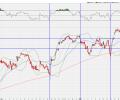
In India, however, the Nifty continues to climb a wall of worry as general elections loom, fiscal deficit surges and the current account deficit is barely under control following subdued gold and crude prices, says Sonali Ranade.

Stock markets would take cues from the upcoming macroeconomic data announcements and global trends besides keeping a watch on the trading activity of foreign investors, analysts said. The last batch of the ongoing earnings calendar would trigger stock-specific action, traders said. "This week, we have to deal with macroeconomic data on both the domestic and global front.

'Indian markets may underperform global peers for the next two quarters.' 'But beyond that, India should catch up and resume its long-term growth path.'

Geopolitical events, macroeconomic data and quarterly earnings of corporates would guide the stock market in a holiday-shortened week ahead, analysts said. Stock markets will remain closed on Wednesday for Ram Navami. "This week promises to be crucial for the market as fresh worries about a potential conflict between Iran and Israel emerge.

'The market is still very bullish. The demand is so strong that for eight models, we have no units in our factories to dispatch to dealers,' said Partho Banerjee, senior executive officer, marketing & sales, Maruti Suzuki India (MSIL).
When global investors look at India, they are interested but they are also a bit nervous

According to an analysis of MSCI Barra indices, a measure of returns from various stock markets across the world for foreign investors, although performing better than China, Indian stocks have lagged behind Brazil and Russia in terms of quarterly returns.


After a year of modest returns, equity investors may anticipate gains of 10-15 per cent in Samvat 2082, which began on October 21. Although valuations have moderated from their peaks a year earlier, they remain above long-term averages, potentially limiting sharp upsides.

The brother of the chancellor of Al Falah University, linked to the Delhi blast probe, has been arrested by Madhya Pradesh police from Hyderabad in connection with nearly 25-year-old fraud cases.

After a record-breaking year, India's automobile industry is entering 2026 on a relatively strong footing, with sales growth expected in the 6-8 per cent range. The outlook is underpinned by policy support, including GST rationalisation, easing monetary conditions, and income tax relief, which together are likely to improve affordability and sustain consumer demand across vehicle segments.

The sharp pullback in mid and smallcap stocks signals a cooling-off period in segments that previously attracted considerable investor interest.
